Cash-first momentum continues to grow but, as the Scottish Government’s groundbreaking plan to end the need for food banks draws to a close, what’s next?


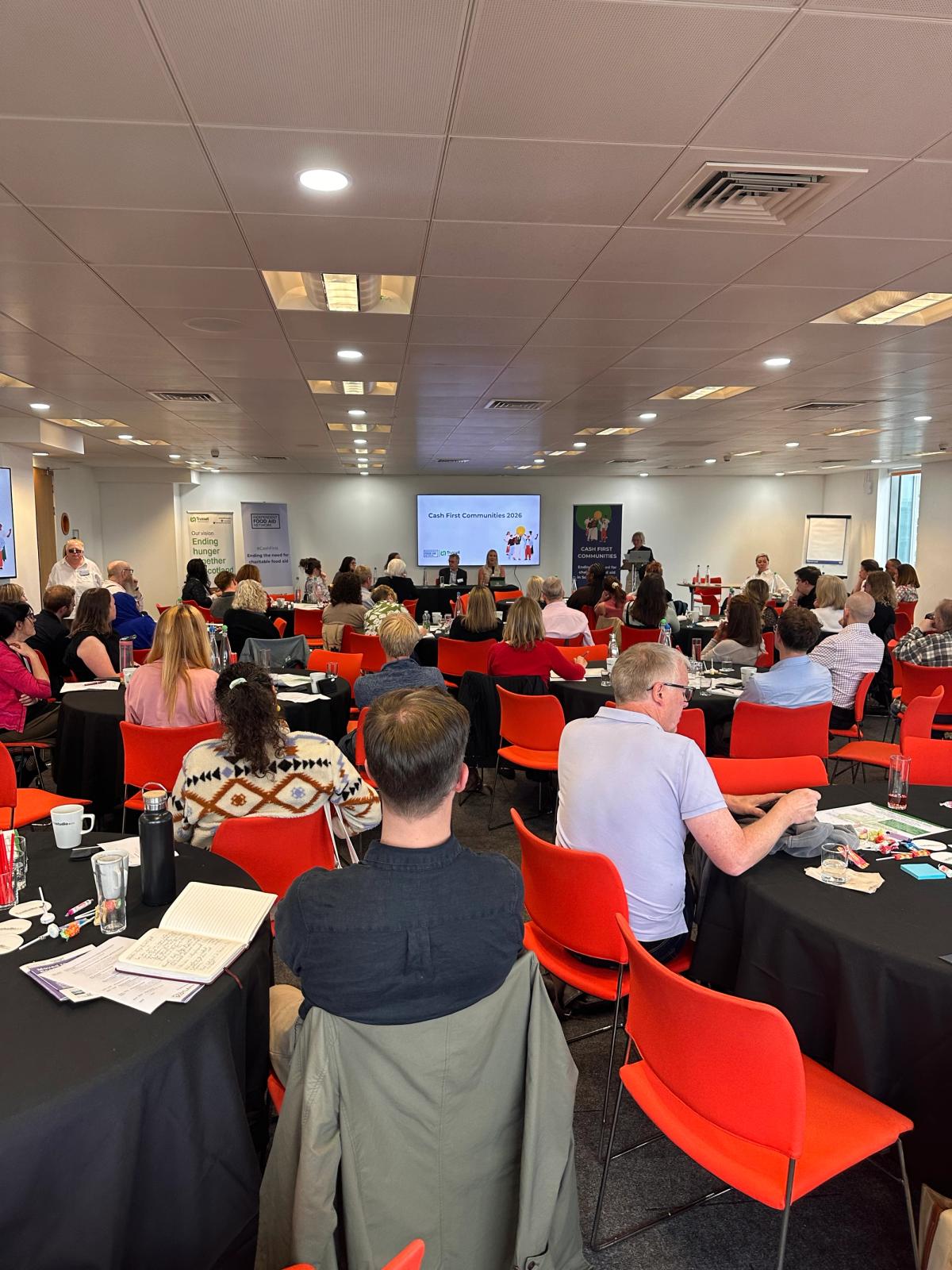
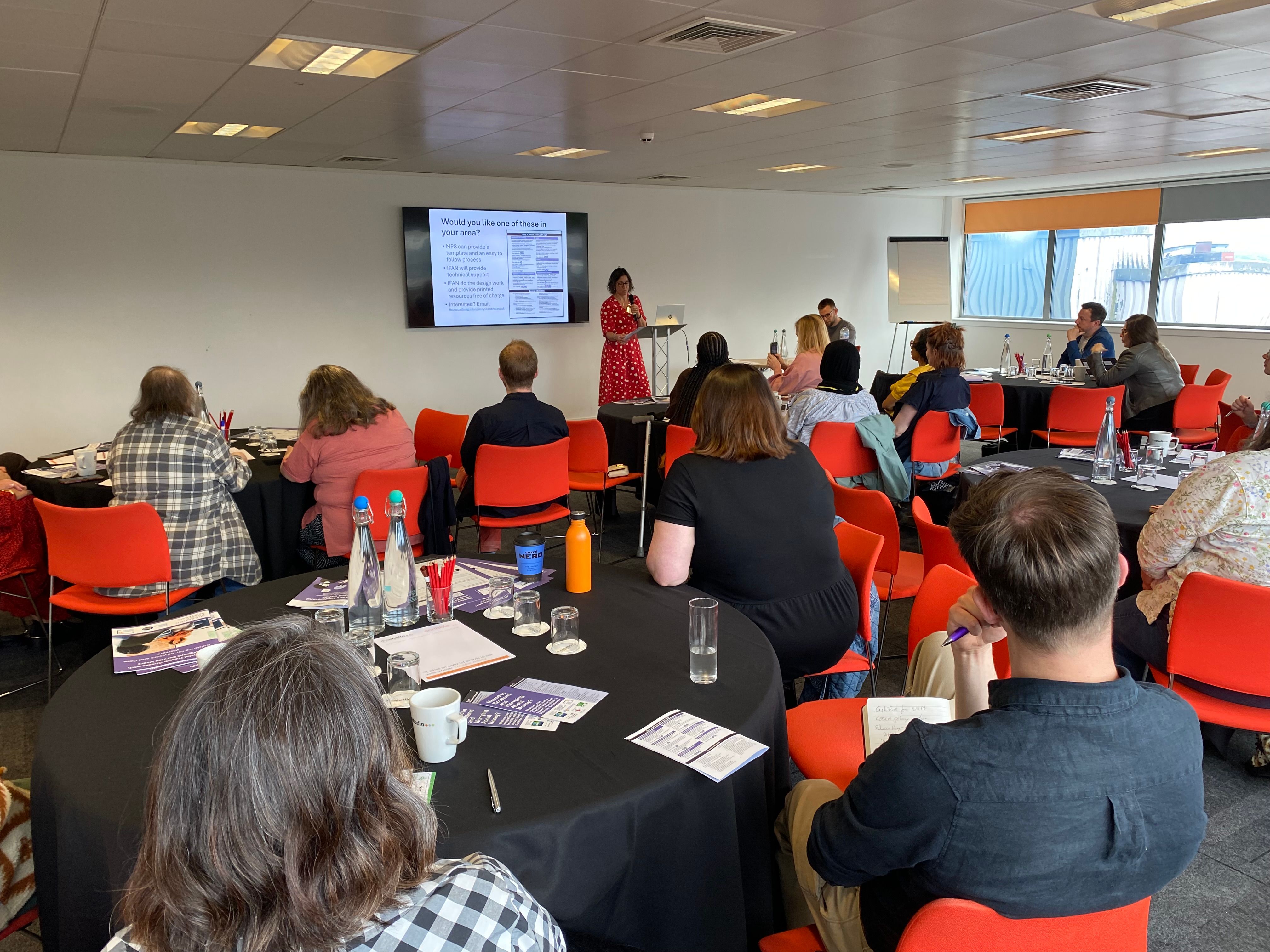
Just around the corner from Glasgow Central station, Trussell and the Independent Food Aid Network (IFAN) welcomed well over 100 delegates to their 2026 Cash First Communities conference last Monday. For the fourth year running, the two networks with member representatives in almost every local authority in Scotland, brought together a range of cash-first pioneers and advocates, determined to ensure that income-focused solutions to poverty are at the heart of governments’ policies. This year’s guest list included local authority staff, food bank managers, advice sector workers, experts by experience, civil servants, food activists, and academics.
With the publication of the final report linked to the work of eight cash-first partnerships working in Fife, Aberdeenshire, Aberdeen, Edinburgh, Glasgow, West Dunbartonshire, Orkney, and North Lanarkshire, and the focus of action one of the Scottish Government’s groundbreaking Cash-First: Towards Ending the Need for Food Banks, due at any moment, there was a sense of anticipation and curiosity in the air. How had the cash-first partnerships faired since an interim progress report had been published, what about the eight other actions outlined in the plan, and what other cash-first progress had been made in Scotland and further afield since we’d last convened in March of last year?
Longtime IFAN trustee, Dr Sinead Furey, food insecurity researcher and senior lecturer at Ulster University, warmly welcomed attendees in first instance and outlined our agenda. Sinead spoke of the difference that both local and national level partnership-working can make in driving home key messages on the need for a cash-first or income-focused approach to food insecurity as well as to shared learning and best practice.
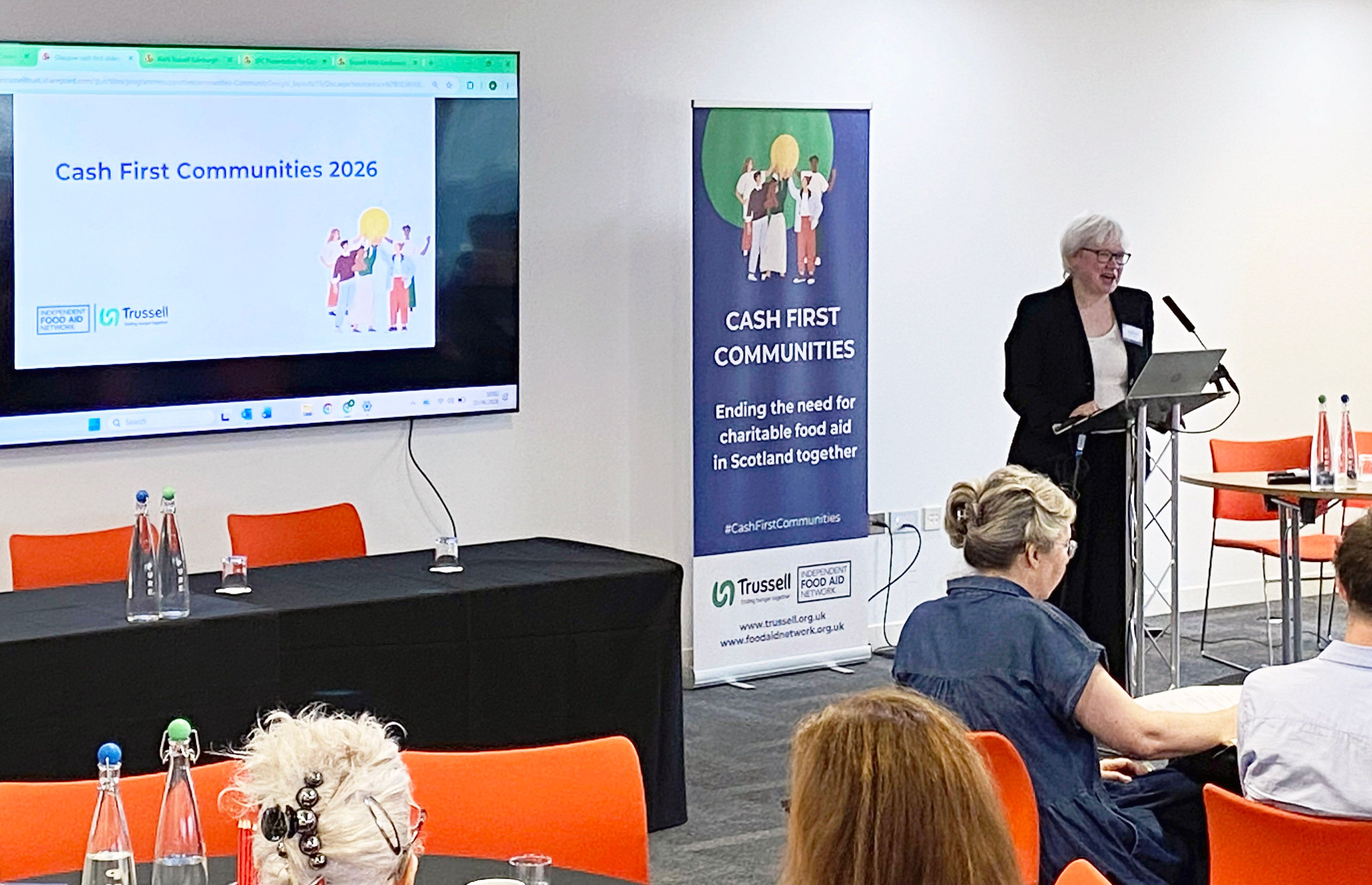
Sinead usefully outlined what we collectively mean by a cash-first approach to food insecurity. Ultimately, taking a cash-first approach to food insecurity would mean everyone is able to access a living income and a healthy standard of living for all. By cash-first approaches we mean prioritising the option of cash payments over shopping vouchers or in-kind support in a crisis, finding routes to income maximisation and access to existing entitlements, and promoting ways to identify local cash-first options and ways to maximise income at the earliest opportunity. Cash-first intervention might include the groundbreaking Scottish Child Payment, the £20 uplift to Universal Credit, or cash-first crisis payments distributed by local authorities through the Scottish Welfare Fund
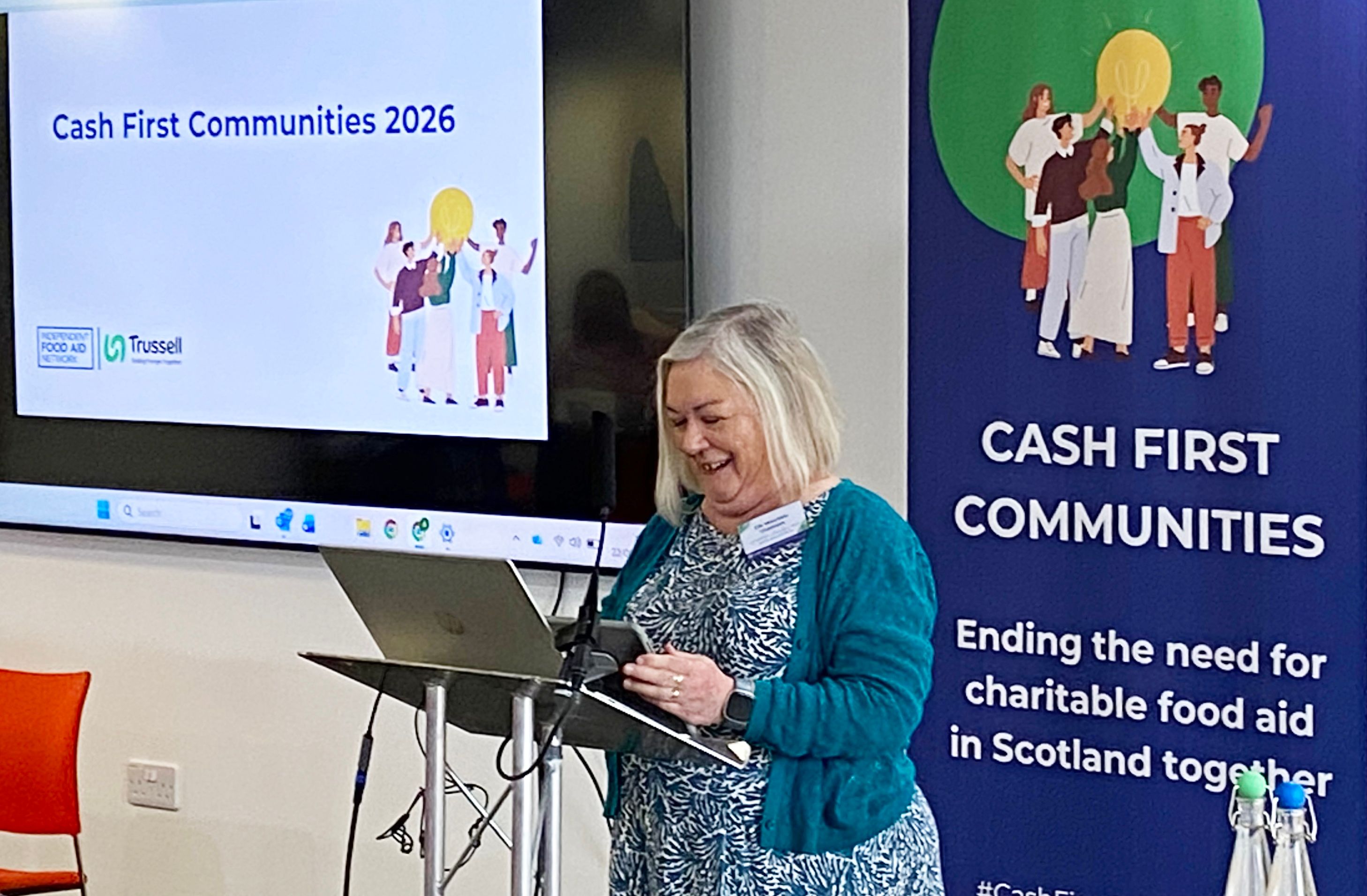
The Convention of Scottish Local Authorities (COSLA) was represented for the first time at a Cash First Communities conference by Community Wellbeing Spokesperson Cllr Maureen Chalmers, who reflected on the impactful work of COSLA in fulfilling cash-first objectives. COSLA and local authority support of the ambition to prioritise cash-first support as a first port of call, is key to embedding the type of responses to poverty that make a difference. Jayne Jones of the Scottish Food Commission was our second keynote speaker; she outlined the work of the independent statutory body and made clear that Scotland cannot claim to be a Good Food Nation where too many people cannot access or afford the food they need.
Pete Ritchie, Executive Director of Nourish Scotland, the learning partner linked to the work of the cash-first partnerships in Scotland, was our next speaker. Pete outlined the significance of the partnership work over the last two years and introduced two inspiring speakers from Aberdeen and Edinburgh. Amy Duncan described the work of the Aberdeen Cash First Network in co-designing with and supporting a group of single males aged 18-45 in receipt of Universal Credit in Aberdeen to set up Aberdeen’s Cash First Flexible Crisis Fund. As a result of cash-first payments, over three quarters of the group have not returned to food banks. Becky Whittaker of City of Edinburgh Council outlined the work of the Household and Advice Services Project combining cash-first payments with advice and support. In 12 months, 395 cash-first payments were made resulting in gains of £12,995 plus £11,000 through additional grants. In both cases, funding has been secured for cash-first focused work to continue.
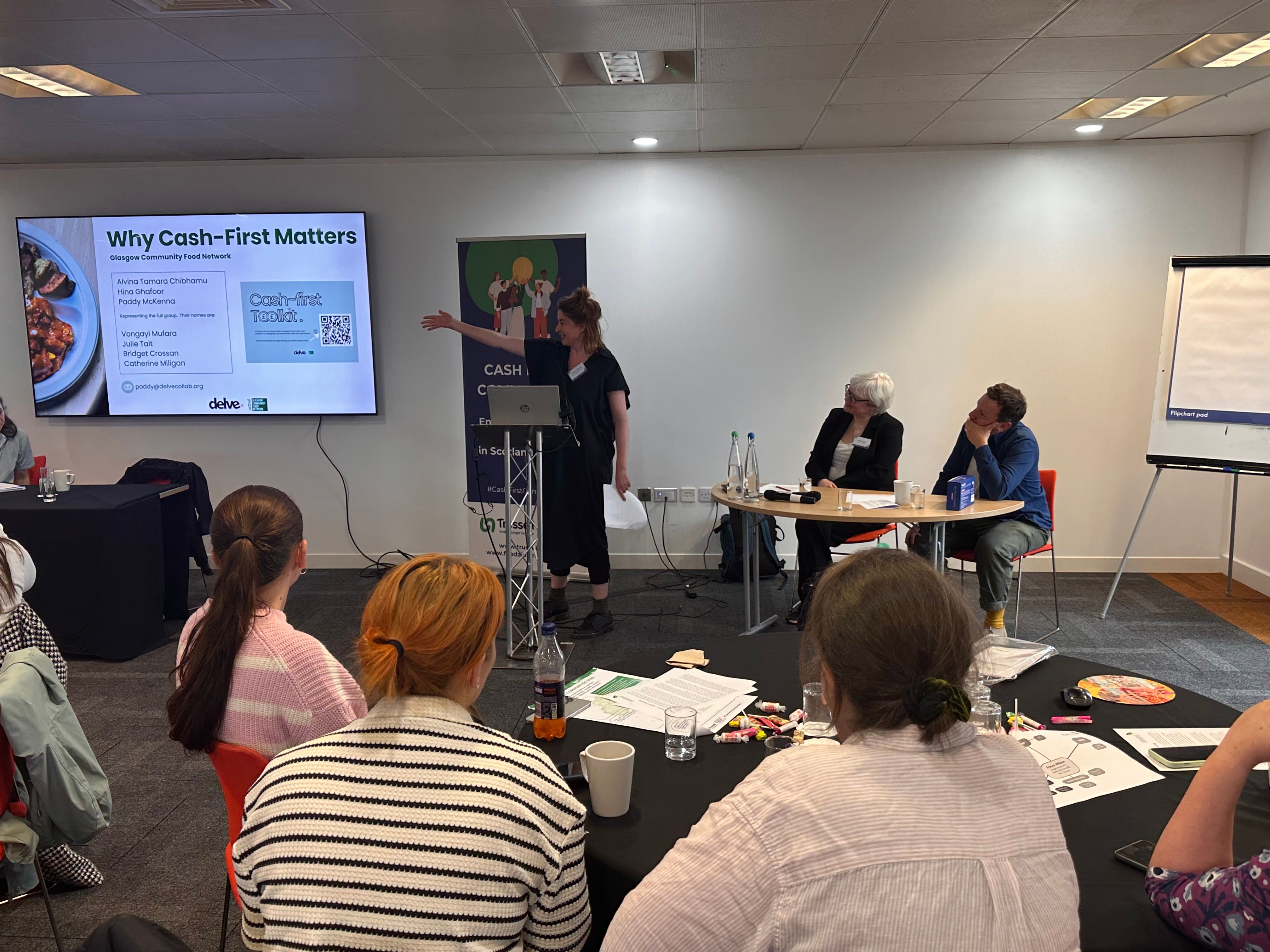
Delegates then had the difficult task of choosing from a range of four different workshops across two floors focused on cash-first support for people with no recourse to public funds, routes out of crisis with Citizens Advice Scotland and two local CABs, public debt with Aberlour, and the Scottish Welfare Fund, with CPAG Scotland. Cash-first conversation continued through lunchtime, before a second round of workshops focused attendees’ minds on dialogue between beneficiaries and funders, how to bust the myths around taking a cash-first approach to food insecurity, building critical cash-first foundations including by reducing the risk of unsafe borrowing, supporting cost management strategies and ensuring access to affordable credit, as well as the work of both Glasgow’s Cash First Project and Aberdeenshire’s Tackling Poverty and Inequalities Strategic Partnership.
Back together for a plenary session we focused on the emergence of the Crisis and Resilience Fund in England and its origins in the cash-first journey in Scotland. The fund’s guidance. co-developed by the Department for Work and Pensions (DWP) alongside English local authorities and a range of third-party organisations, including IFAN and Trussell, requires default cash-first crisis payments to be distributed to residents in need alongside the ways and means to support individuals to build financial resilience. The CRF Alliance has been formed to facilitate the learning of best practice and collectively evaluate the impact of the funding.
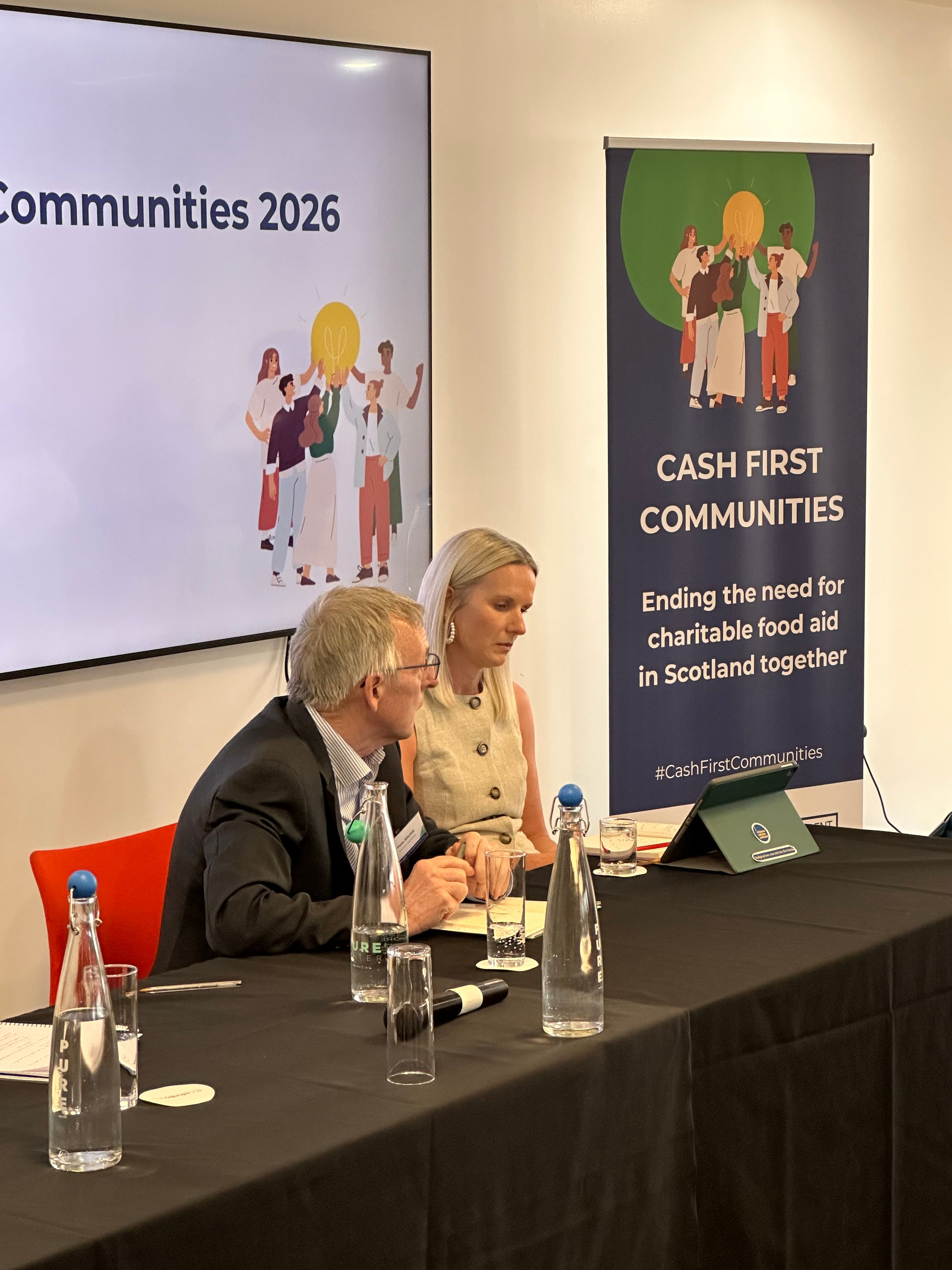
Polly Jones, now Trussell’s Director of Communities, was up next to chair a riveting panel discussion with Pete Ritchie, Executive Director of Nourish Scotland, Emma Jackson, Head of Social Justice at Citizens Advice Scotland, Zahada representing Trussell’s Lived Experience Panel, and IFAN trustee Dr Maddy Power, speaking on behalf the Safety Nets project. No stone was left unturned in a wide-ranging and fascinating discussion from the need to get collectively get behind a Minimum Income Guarantee in Scotland to the problem with conflating the issues of food waste and food poverty. We could have kept on talking but it was time for the conference to come to an end.
As we look ahead to what’s next, the debate around price caps seems to be top of the agenda but while this might be a manifesto commitment, we would urge the Scottish Government to focus on income based, cash first solutions that we know are effective and deliver. Because the evidence is clear – hunger in Scotland is not a food problem, it is an income problem. To end the need for charitable food aid, we must see bolder and more urgent actions to increase peoples incomes, to end the cycle of poverty and to ensure everyone can afford the essentials.
We know what works – it’s now about scaling up investment. We know the Scottish Child Payment reduces child poverty. We know the Scottish Welfare Fund provides choice and dignity to people in financial crisis. We know that the Scottish Government’s investment in advice and support to maximise income, helps reduce financial precarity in Scottish households. We know that tackling public debt helps people keep more of their money. And we know that the key to ensuring everyone in Scotland can afford the essentials is to get more money into people’s pockets. We cannot lose sight of the fact that a cash-first approach to food insecurity works and reduces the numbers of people struggling to afford food and other essentials.
So, if we are to keep the cash-first momentum going in Scotland, we must now see a renewed commitment from the Scottish Government, in autumn’s Programme for Government, to an updated and fully funded cash first action plan, to end the need for charitable food aid, so we can make further progress, and at pace.
IFAN and Trussell are very grateful indeed to all our brilliant speakers for all their time and invaluable input. You can access the slides shared at the conference. They can’t be replicated without the owners’ permission. Do get in touch with us via admin@foodaidnetwork.org.uk for information.
For cash-first resources visit the Community Food National Reference Group’s Food Insecurity Resource Space and IFAN’s Why Cash First? page and you can find out more about Trussell’s work in Scotland.
Find your local cash-first ‘Worrying About Money?’ leaflet and its alternative versions here and the new ‘Moved to Scotland and Worrying About Money? resources co-produced with local partners and Migration Policy Scotland.
Where next?
Follow our work
One timely email each quarter and we'll never share your details
Find out more about our privacy policy