Strengthening Cash-First Support and Tackling Poverty in 2026
Cornwall continues to face deep and growing financial pressures. Rising living costs, insecure work, high housing prices and rural isolation mean many households are being pushed into crisis — not because of short-term shocks, but through ongoing struggles to make ends meet. For too many families, crisis has become a condition rather than an event. Yet over the past five years, a different kind of response has been taking shape. Community organisations, advice services, local government, health, housing and faith groups have been working together to build an approach to crisis support that puts dignity, income and early intervention at its core.
Since 2021, Transformation Cornwall and its partners have been developing a cash-first ecosystem that is now influencing policy, shaping frontline practice and strengthening community resilience. This work has been intentional and collaborative, rooted in the belief that people facing financial hardship need access to income, advice and rights-based support before they reach breaking point. As we enter 2026, the launch of the national Crisis and Resilience Fund (CRF) — guided by the national CRF guidance — offers a major opportunity to deepen this approach. The CRF places cash-first support, prevention and financial resilience at the centre of crisis response, closely aligning with the work Cornwall has been building for years. This alignment matters.
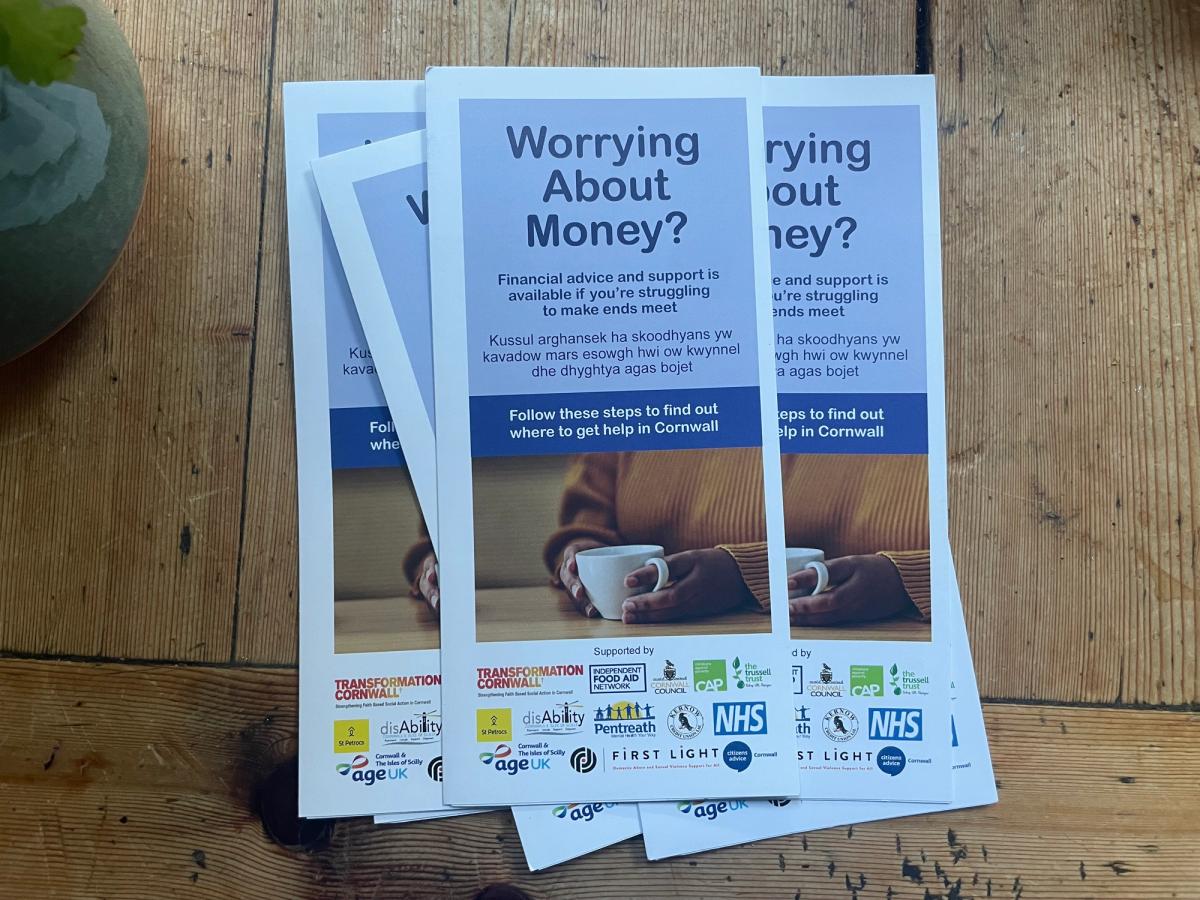
The journey to this point has unfolded step by step. In 2021 and 2022, partners focused on building shared understanding and shared tools. Cornwall’s ‘Worrying About Money?’ leaflet — co-produced by IFAN, Trussell, Transformation Cornwall and Cornwall Council — was developed to reflect local support pathways and is available online here. Alongside this, Money Counts training helped frontline workers shift conversations away from emergency food aid and towards income, advice and rights. Early policy reviews embedded a more consistent, income-focused approach across organisations. These foundations mattered. They created the conditions for change not only in systems, but in everyday practice.
By 2023, this work was firmly rooted in communities. Local forums, online discussions and engagement sessions supported frontline workers and volunteers to embed cash-first principles into daily interactions. What began as a shared ambition was becoming a lived reality across food banks, community hubs and advice services. The way financial crisis was understood — and responded to — was changing.
In 2024, the partnership’s influence became increasingly visible at a strategic level. Engagement through the Turning the Tide Cost of Living Summit and ongoing steering group work helped shape countywide decision-making, including improvements to Cornwall Council’s crisis support application process. Cash-first thinking was no longer running alongside the system. It was becoming part of it.
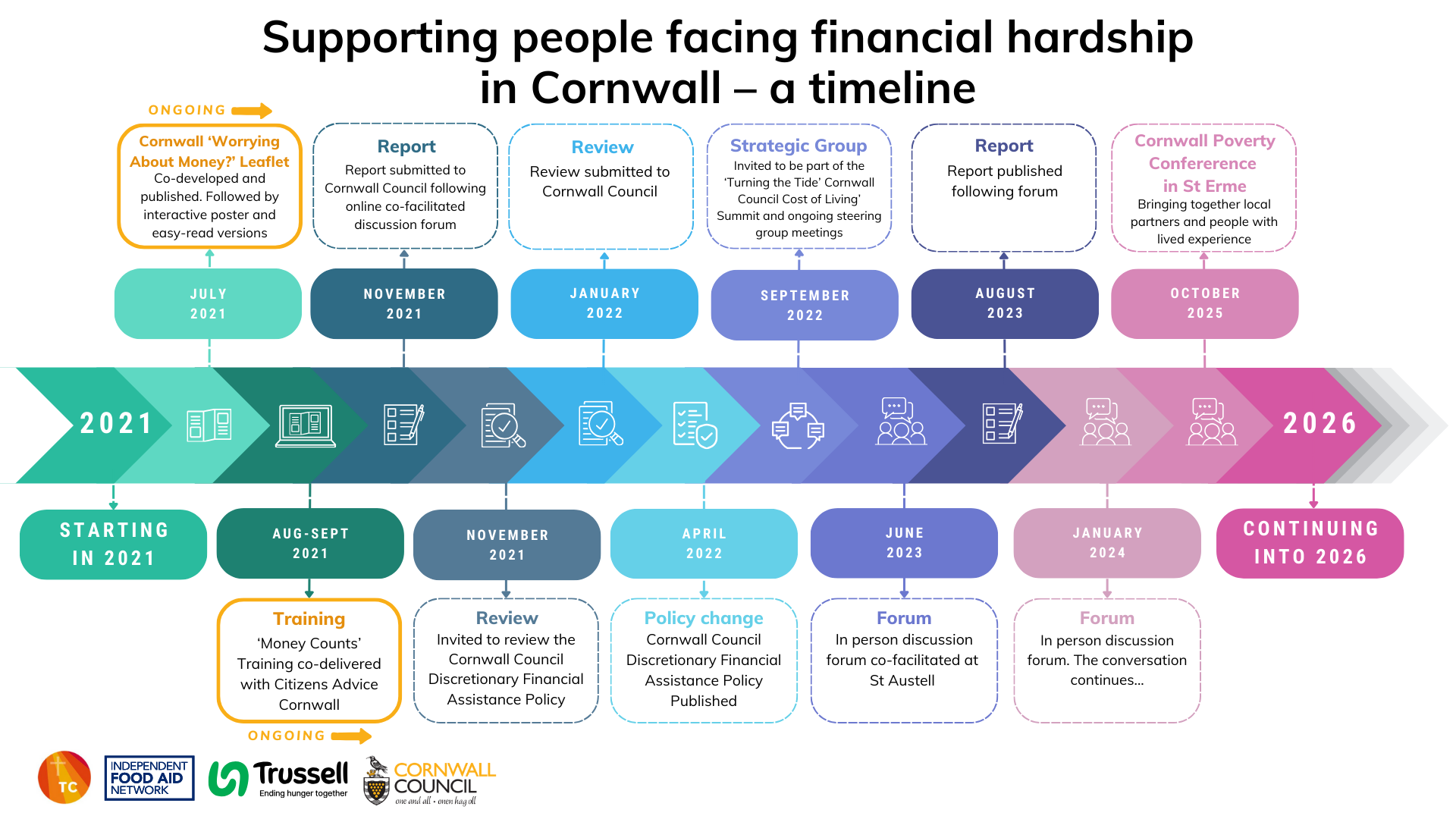
The focus in 2025 was on strengthening and extending this work across Cornwall. Engagement deepened in communities facing intensifying hardship, and cash-first tools reached further into rural and coastal areas where access to support is often limited. Collaboration between advice services, community organisations and statutory partners became more coordinated, helping people navigate support more quickly and with less stigma.
Tens of thousands of Worrying About Money? leaflets are now in circulation, with a digital version embedded on Cornwall Council’s website. The resource is used daily in GP surgeries, schools, community hubs, food banks and advice services, helping people understand their options and access income-based help earlier. Hundreds of frontline workers have been trained to use the tool, and Money Counts training continues to reinforce a shift away from food-first responses and towards income, rights and advice. This is how system change becomes real — one informed conversation at a time.
Alongside this practical work, the 2025 Index of Multiple Deprivation (IMD) has provided a clearer picture of need across Cornwall. The IMD brings together data on income, employment, health, education, housing, crime and access to services, helping to identify where pressures are most acute. It confirms what many communities already know: deprivation is deepening in areas such as Camborne–Pool–Redruth, St Austell, Penzance and Newquay, as well as in isolated rural settlements where distance from services compounds financial strain. In 2026, this data will guide delivery, ensuring that cash-first support is targeted where it can have the greatest impact and where barriers to access remain highest. Data, in this context, is a tool for fairness.
This section also aligns with the Crisis Support Working Group's Cash-First but Not Cash-Only briefing, which reinforces the importance of income-focused support alongside wider community provision.
National change is now aligning with this local action. The Crisis and Resilience Fund, launching in April 2026, represents a significant shift in how crisis support is delivered across the UK. Its emphasis on cash-first responses, early intervention and long-term financial resilience mirrors the work already underway in Cornwall. The county features as an example of cash-first best practice in the national guidance, recognising the strength of local partnerships and the progress made in embedding income-focused support across services. Cornwall is not starting from scratch. It is ready to lead.
For wider context, IFAN and Trussell’s joint briefing on the CRF and charitable food provision provides further insight into how the fund interacts with community food support.
Transformation Cornwall’s wider work continues to focus on the pressures that trap people in crisis. Keep Cornwall Carpeted advocates for safe, dignified flooring as a basic household need. Our modern-day slavery work strengthens community awareness and responses to exploitation. The Pretty Poverty report highlights hidden hardship in rural communities often assumed to be thriving. These issues are deeply interconnected drivers of financial insecurity. Addressing them together is essential to building resilience and restoring agency.
Rural poverty will be a central focus in 2026. The 2025 Rural Poverty Conference brought together leaders, experts and people with lived experience to shape new responses to the challenges facing rural Cornwall, where access to essentials remains a significant issue. Building on this momentum, our flagship Moving Towards Flourishing event in 2026 will bring partners, communities and national stakeholders together to explore how Cornwall can build a more resilient rural future. With IMD data, national funding and community-led insight aligned, this will be a defining moment for shaping the next phase of support.
Throughout 2026, Transformation Cornwall will continue to work closely with IFAN, Trussell, Cornwall Council, Citizens Advice Cornwall, Cornwall Mind, local food banks and community pantries, advice and debt support organisations, GP surgeries, schools, family hubs, housing providers, homelessness services and the many community organisations and faith groups committed to dignity and early intervention. Together, we will deliver workshops in areas of greatest need, run Worrying About Money? sessions, expand Money Counts training and host collaborative action meetings that shape local delivery.
The aim remains clear: that anyone facing crisis in Cornwall encounters dignity first, and that every household — in every corner of the county — has the chance not just to get by, but to flourish.
The work is underway. The need is urgent. And the future can be different. 2026 is the year we continue to prove it.
Where next?
Follow our work
One timely email each quarter and we'll never share your details
Find out more about our privacy policy